Pink quill care guideTillandsia cyanea
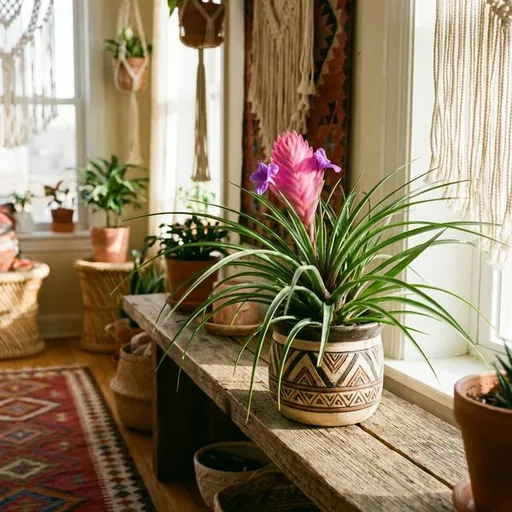
Striking pink bract with violet flowers. Ranked #69 of Europe's most-searched houseplants.
WateringWhen and how much water
Water Pink quill when the top 2 cm of soil feel dry. In summer that's typically every 5 to 7 days; in winter slow down to every 10 to 14 days. Use room-temperature water and let any excess drain — never leave the pot sitting in standing water.
The real schedule depends on three things the calendar can't see: the actual light at the plant, the pot's size and material (terracotta dries faster than glazed ceramic), and your local humidity. Botanicaly's app retunes the schedule from those signals on every reminder.
LightHow bright a spot it needs
Pink quill is bright / direct light: needs several hours of direct sun. Turn the pot every week so it grows evenly. The ideal lux range is 10,000 - 50,000 lux. In practical terms, place it directly in front of a south or southwest window, or 30 cm from an east window.
Pet safetySafe with cats and dogs
Pet-safe. Pink quill is non-toxic to cats and dogs. Safe to keep in a home with pets.
Get the personalised schedule
Botanicaly tunes water, light, and care reminders for Pink quill based on your home's actual conditions. Free on iOS and Android.
Download BotanicalyFAQCommon questions
How often should I water a Pink quill?
Water your Pink quill (Tillandsia cyanea) when the top 2 cm of soil feel dry. In summer, that's typically every 5 to 7 days; in winter, slow down to every 10 to 14 days. Botanicaly's app tunes this further based on your home's actual light, pot size, and local weather.
How much light does a Pink quill need?
Pink quill is bright / direct light: needs several hours of direct sun. Turn the pot every week so it grows evenly. The ideal lux range is 10,000 - 50,000 lux. In practical terms, place it directly in front of a south or southwest window, or 30 cm from an east window.
Is Pink quill safe for cats and dogs?
Pink quill is non-toxic to cats and dogs. Safe to keep in a home with pets.